What supercalifragilisticexpialidocious prize should the members of the Basel Committee win?
What supercalifragilisticexpialidocious honorary prize should we award current and former members of the Basel Committee for Banking Supervision?
Here are some of the Basel Committee’s most outstanding merits:
First and foremost, by decreeing their risk weighted bank capital requirements, they focused entirely on making our banks safe, without wasting any efforts in whatever else banks are supposed to do, which of course is of secondary importance.
And of course, by arguing that the greatest dangers to the banking system revolve around what’s perceived risky and not what’s perceived safe, they have effectively been able to return bank regulations to a geocentric believing world, thereby much honoring those still longing for an Inquisition’s kind of authority.
By decreeing much lower bank capital requirements against public debt when issued in a currency the government can print it has, even though no government bureaucrat or political operator is personally responsible for its repayment, it has much incentivized these to do more and better with these funds, than what the private sector would do with their bank loans.
By decreeing lower bank capital requirements against residential mortgages than against loans to farmers, small businesses and entrepreneurs, it has lowered the interest costs of these and thereby helped further the noble cause of home affordability.
By decreeing the credit risk weighted bank capital requirements, it has empowered massive numbers of creative financial engineers working from their desks and who, naturally, are much more sophisticated than those traditional loan officers who mostly had to learn from experiences on main street.
By making the capital requirements depend much on the credit rating agencies expertise, they made sure bankers would have to consider the credit ratings much more than what they already did.
Since the perceived risks were lower in good times, they made sure that the so much desired economic booms, were not crudely interrupted by such untimely actions such as forcing banks to increase their capital.
The risk weighted capital requirements also fertilized the growth of a myriad of financial agents operating in what is usually referred to as shadow markets. Though naturally not fully transparent, (it is in the shadows), that must surely have increased the sophistication of our economies.
Since the large banks can naturally better afford to manage the regulatory complexity of risk weighted bank capital requirements, it has fostered a great period of bank consolidation, which has left us with a much lesser number of banks to be concerned about.
Since most of those banks that disappeared by consolidation or other factors were operating in small cities and small communities, that must certainly have propelled citizens to move to bigger and, as we all know, much stronger cities.
And of course, when compared to the leverage ratio, meaning the same capital against all assets, the risk weighted bank capital have created hundreds of times more jobs for bank regulators, supervisors and those in banks responsible for managing the regulators.
Finally, one thing is sure, all this has given banks the incentives to much refinance our safer present, instead of venturing out financing the riskier future, which means that all us elderly should, in a loud voice, exclaim Hurrah!
Friends, since there could be suspicions about a conflict of interest, a Sveriges Riksbank Prize in Economic Sciences in Memory of Alfred Nobel would probably not do… so what prize do you suggest?
And what about given them all together, as part of the prize, an all-inclusive year vacation on a tropical island full of coconut trees? I’m sure some Bukele type entrepreneur would be able to get a bank loan in order to be able to provide such amenities at a reasonable cost… that is as long as the bank capital requirements were not, because of that, hugely increased for such a loan.
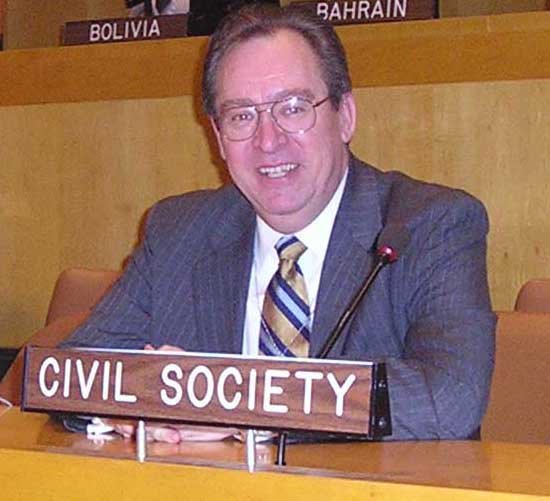
Note: When handing out the prize to the winners, it might behoove the organizers not to invite guests, like Per Kurowski who, for decades has expressed, especially as a grandfather, serious reservations about the intelligence and motivations of those to be honored.


 Posts
Posts