Showing posts with label Executive Directors. Show all posts

Sunday, May 19, 2013

If only Basel Committees’ bank regulations applied to the World Bank.

Then perhaps it would have been easier for the World Bank to understand how flawed these bank regulations, which are basically being imposed on the whole world, really are. 

Can you imagine the Executive Directors having to discuss that one way of reaching capital sufficiency for the bank, so as to satisfy regulators, is to lend more to those countries perceived as ‘infallible” and lend less to those countries perceived as “risky”, because the latter requires the bank to hold much more capital as a percentage… and this even though the “risky”, precisely because they are perceived as “risky”, already receive much smaller loans under much more demanding terms? 

Risk-taking is the oxygen of all development, and the “risky” are usually the actors in the real economy who, living on its margins, most need access to bank credit. In fact no country has been able to develop by means of regulations which would favor “The Infallible, those already favored by banks and markets, and thereby odiously discriminating against “The Risky” those already discriminated by banks and markets. 

And not only that, since no major bank crisis has ever resulted from excessive exposures to "The Risky" but always from excessive exposures to who were wrongly thought as being “The Infallible, the whole regulatory exercise is completely useless. 

That the world’s premier development bank, and which I as a former executive director have learned to admire in so many ways, has not been able to stand up to regulators and speak out in the name of risk-taking and in the name of “The Risky”, is a terrible disappointment to me. 

Much as a result of its silence, regulators around the world are now castrating the banks, making these completely useless in terms of performing their vital social function of allocating financial resources efficiently. 

Also much as a result of its silence, banks around the world are dangerously overpopulating whatever is perceived as a “safe-haven” 

And much as a result of its silence, youth all around the world are suffering from the lack of jobs which have resulted from banks not lending to small, mediums and large businesses and entrepreneurs who do not possess top credit ratings in equitable terms. 

Perhaps the World Bank would benefit from the recommendation Katie Couric says she once received, namely that "A boat is always safe in the harbor, but that's not what boats are built for."

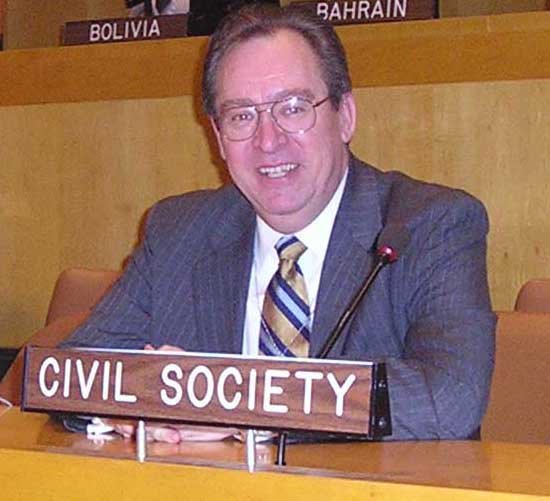
PS. Some in the World Bank are perfectly aware of how much, during my two brief years as an ED, I warned about the crisis that was doomed to happen. And yet, these meek do not dare to officially invite me to the World Bank to expose to a wider audience the fundaments of my criticisms against the pillar, the pride and the joy of the Basel Committee, the risk-weighted capital requirements. 

Wednesday, June 30, 2004

I saw something. I said something. No one listened. C'est la vie?

October 1998, Op-Ed Venezuela: History is full of examples of where the State, by meddling to avoid damages, caused infinite larger damages”

November 1999, Op-Ed Venezuela: “The possible Big Bang that scares me the most, is the one that could happen the day those genius bank regulators in Basel, playing Gods, manage to introduce a systemic error in the financial system, which will cause its collapse”

January 2003 in a letter published by the Financial Times: "Everyone knows that, sooner or later, the ratings issued by the credit agencies are just a new breed of systemic error to be propagated at modern speeds. Friends, please consider that the world is tough enough as it is."

March 2003, in a formal discussion as and Executive Director (ED) at the Executive Board of the World Bank: The sole chance the world has of avoiding the risk that Bank Regulators in Basel, accounting standard boards, and credit-rating agencies will introduce serious and fatal systemic risks into the world, is by having an entity like the World Bank stand up to them—instead of rather fatalistically accepting their dictates and duly harmonizing with the IMF.

April 2003, in a formal written statement delivered as an ED of the World Bank: “Ages ago, when information was less available and moved at a slower pace, the market consisted of a myriad of individual agents acting on limited information basis. Nowadays, when information is just too voluminous and fast to handle, market or authorities have decided to delegate the evaluation of it into the hands of much fewer players such as the credit rating agencies. This will, almost by definition, introduce systemic risks in the market and we are already able to discern some of the victims, although they are just the tip of an iceberg. 

May 2003 In a workshop for bank regulators at the World Bank I simply cannot understand how a world that preaches the value of the invisible hand of millions of market agents can then go out and delegate so much regulatory power to a limited number of human and very fallible credit-rating agencies. This sure must be setting us up for the mother of all systemic errors.

May 2003, Op-Ed Venezuela: “Perhaps we need to include a label that states: Warning excessive banking regulations from the Basel Committee can be very dangerous for the development of your country”

June 2004 “Central bank governors and the heads of bank supervisory authorities in the Group of Ten (G10) countries met today and endorsed Basel II” the publication of the International Convergence of Capital Measurement and Capital Standards: a Revised Framework, the new capital adequacy framework commonly known as Basel II… It’s lunacy